Insurance Verification 101: Why Real Time Eligibility Checks Matters
Most claim denials do not start at the billing stage. They start earlier, often at the front desk, when a patient's coverage was never confirmed before their appointment.

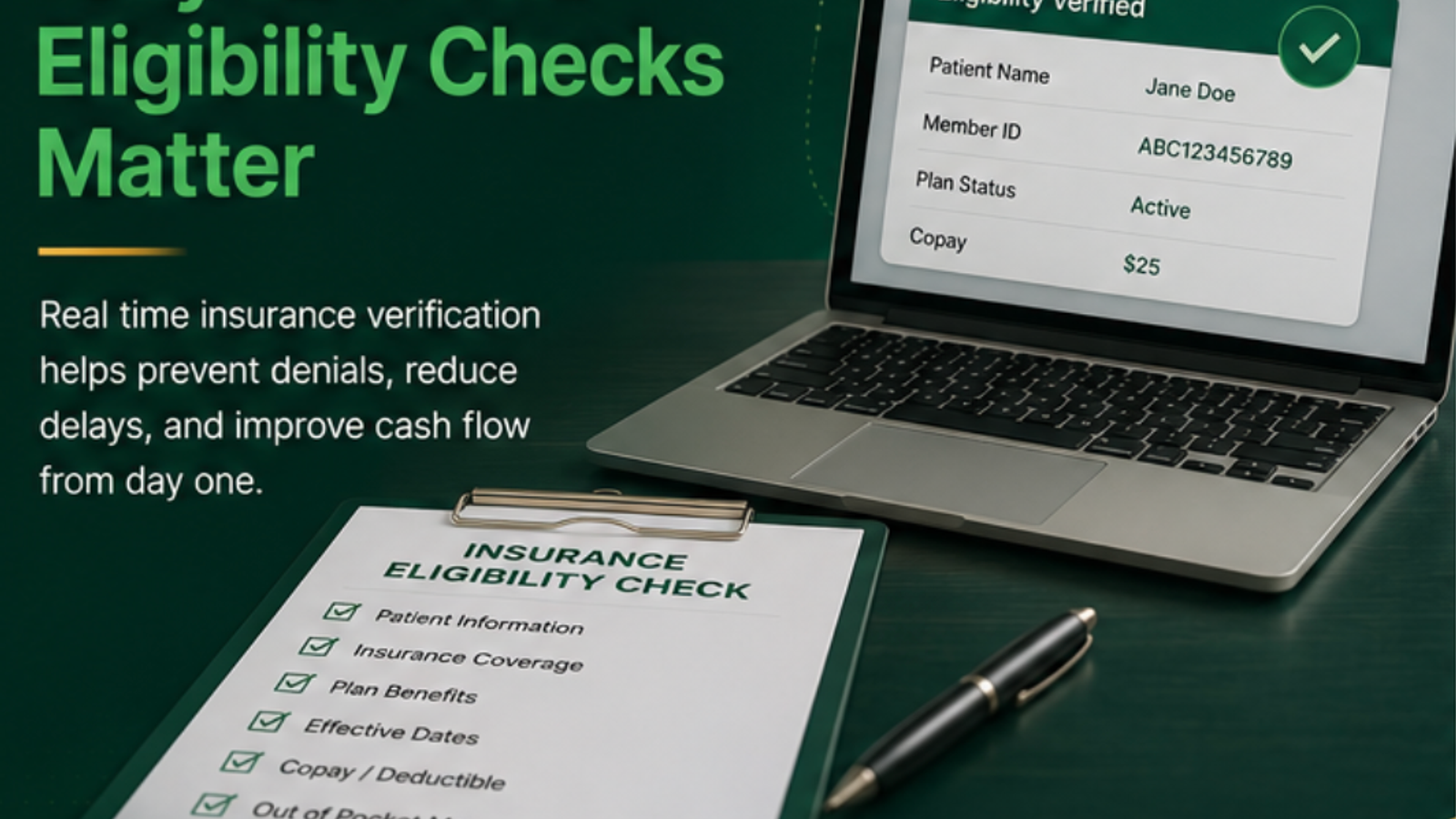
Most claim denials do not start at the billing stage. They start earlier, often at the front desk, when a patient's coverage was never confirmed before their appointment. Insurance verification services exist specifically to catch these issues before they turn into denied claims, and understanding how the process works is the first step toward reducing preventable denials at your practice.
What Insurance Verification Actually Involves
Insurance verification confirms that a patient's coverage is active, identifies what benefits apply to the specific service being provided, and flags any authorization requirements before the appointment happens. This includes checking copay and deductible amounts, confirming the plan covers the specific provider or facility, and identifying whether a referral or prior authorization is needed for the visit.
Done well, verification happens well before the patient arrives, giving staff time to resolve any issues, whether that means contacting the patient about a coverage gap or submitting an authorization request in advance.
Why Real Time Eligibility Checks Matter
Insurance coverage can change more often than practices expect. A patient's plan may have lapsed, changed carriers, or shifted to a different plan type since their last visit, sometimes without the patient even realizing it. Real time eligibility checks, run close to the date of service rather than relying on information from months earlier, catch these changes before they become a denied claim and an awkward conversation with the patient after the fact.
This matters just as much for returning patients as new ones. Practices that only verify insurance for new patients often miss coverage changes among their existing patient base, which is a common and avoidable source of denials.
The Cost of Skipping Verification
When verification is skipped or rushed, the consequences show up later and are more expensive to fix. A denied claim due to an eligibility issue requires staff time to investigate, correct, and resubmit, and in some cases the service becomes the patient's financial responsibility, creating a difficult billing conversation that could have been avoided with a five minute check before the appointment. Multiplied across a full patient schedule, the cumulative cost of skipped verification adds up quickly.
What a Strong Verification Process Looks Like
- Eligibility checks run for every appointment, not only new patients
- Authorization requirements confirmed before the date of service, not after
- Coverage details communicated clearly to front desk staff before check in
- A defined process for handling coverage issues discovered before the appointment
Practices that build verification into a consistent, defined workflow catch far more issues than those that treat it as an occasional task handled only when staff have extra time.
Insurance Verification and the Patient Experience
Verification is not only a billing safeguard, it directly affects the patient experience. A patient who arrives expecting a routine visit and instead learns their insurance does not cover the service, or that a large out of pocket cost applies, is understandably frustrated, especially if that information could have been shared in advance. Combining verification with clear patient scheduling services allows practices to communicate coverage details proactively, which builds trust rather than creating an uncomfortable surprise at check in.
How MediSync RCM Handles Verification
Our team verifies eligibility and benefits in advance of each appointment, flags authorization requirements before the date of service, and communicates coverage details to your staff clearly, so there are no surprises for your team or your patients. This work integrates directly with our broader front office and back office staffing support, so verification, scheduling, and billing all stay connected rather than operating as separate, disconnected tasks.
Practices working with a medical billing company Houston TX team benefit from verification processes built specifically around the payers most common in the local market.
Building Verification Into Your Front Desk Workflow
Verification works best when it is a required step in the scheduling process rather than an optional task squeezed in when staff have time. Practices that build verification directly into their scheduling workflow, triggering an eligibility check automatically once an appointment is booked, catch far more issues than those relying on staff to remember to check manually. This structural approach removes the risk of verification being skipped during a busy week.
A clear internal process also matters for handling what happens after an issue is found. Staff should know exactly who to notify, how to contact the patient, and what the next step is when a coverage problem surfaces, rather than improvising a response each time.
Verification for High Cost Procedures and Referral Heavy Specialties
Verification matters for every visit, but it carries even higher stakes for high cost procedures and specialties that rely heavily on referrals, such as cardiology, orthopedics, and gastroenterology. A missed authorization on an expensive procedure represents a much larger financial risk than a missed authorization on a routine office visit. Practices in these specialties benefit from an especially disciplined verification process, since the cost of a single preventable denial can be significant.
Training Front Desk Staff to Communicate Coverage Clearly
Even a thorough verification process falls short if the information it uncovers is not communicated clearly to patients. Front desk staff benefit from simple, consistent language for explaining coverage details, copay amounts, and any out of pocket costs before a service is provided, rather than leaving patients to piece together their financial responsibility from a bill that arrives weeks later. Practices that invest in this kind of front desk training alongside their verification process tend to see fewer billing related complaints and a smoother overall patient experience.
Verification as Part of a Connected Revenue Cycle
Insurance verification works best when it is treated as one connected piece of a larger revenue cycle rather than an isolated front desk task. Information gathered during verification, such as authorization requirements or coverage limitations, should flow directly to billing staff so it is available when the claim is eventually submitted. Practices that keep verification, scheduling, and billing information siloed in separate systems or separate teams often lose valuable context along the way, which increases the chance that a detail confirmed during verification never actually makes it into the claim itself.
Frequently Asked Questions
Q: What is the difference between insurance verification and prior authorization?
A: Verification confirms that a patient's coverage is active and what benefits apply, while prior authorization is a separate approval some payers require before certain services will be covered.
Q: How far in advance should insurance be verified?
A: Ideally a few days before the appointment, close enough to reflect current coverage but with enough time to resolve any issues before the patient arrives.
Q: Does insurance verification need to happen for returning patients too?
A: Yes. Coverage can change between visits even for long time patients, and skipping verification for returning patients is a common source of preventable denials.
Q: Can insurance verification be automated completely?
A: Technology can speed up the process, but exceptions such as authorization requirements or unusual plan details often still require a person to review and confirm before the appointment.
Q: What happens if a coverage issue is found during verification?
A: Staff can contact the patient to discuss options, request updated insurance information, or begin an authorization request in advance, all before the appointment takes place.
Q: Does MediSync RCM handle both verification and scheduling?
A: Yes. Our insurance verification and patient scheduling services are designed to work together as part of a connected front office support system.
Q: Why does verification matter more for high cost procedures?
A: A missed authorization or coverage issue on an expensive procedure represents a much larger financial risk than the same issue on a routine visit, making disciplined verification especially important.
Q: How can a practice make verification a consistent part of its workflow?
A: Triggering eligibility checks automatically once an appointment is scheduled, rather than relying on staff to remember manually, helps ensure verification happens consistently for every patient.
Q: Who should be responsible for insurance verification at a practice?
A: Ideally a dedicated staff member or team, rather than whoever happens to be free at the front desk, since consistent ownership leads to more reliable results than a shared, informal responsibility.
Q: Does insurance verification slow down patient scheduling?
A: When built into the scheduling workflow rather than handled as a separate manual step afterward, verification typically adds very little friction while preventing a much larger problem later.
About MediSync RCM Team
MediSync RCM is a Houston-headquartered revenue cycle management firm supporting healthcare practices nationwide.
Related Articles


Stay Updated with Healthcare Insights
Get the latest articles on medical billing, revenue cycle management, and healthcare technology delivered to your inbox.