Medical Coding Accuracy: Why Certified Coders Protect Your Revenue
Every claim a practice submits depends on accurate coding. Get it wrong, even slightly, and the result can be a denial, a delayed payment, or an audit.

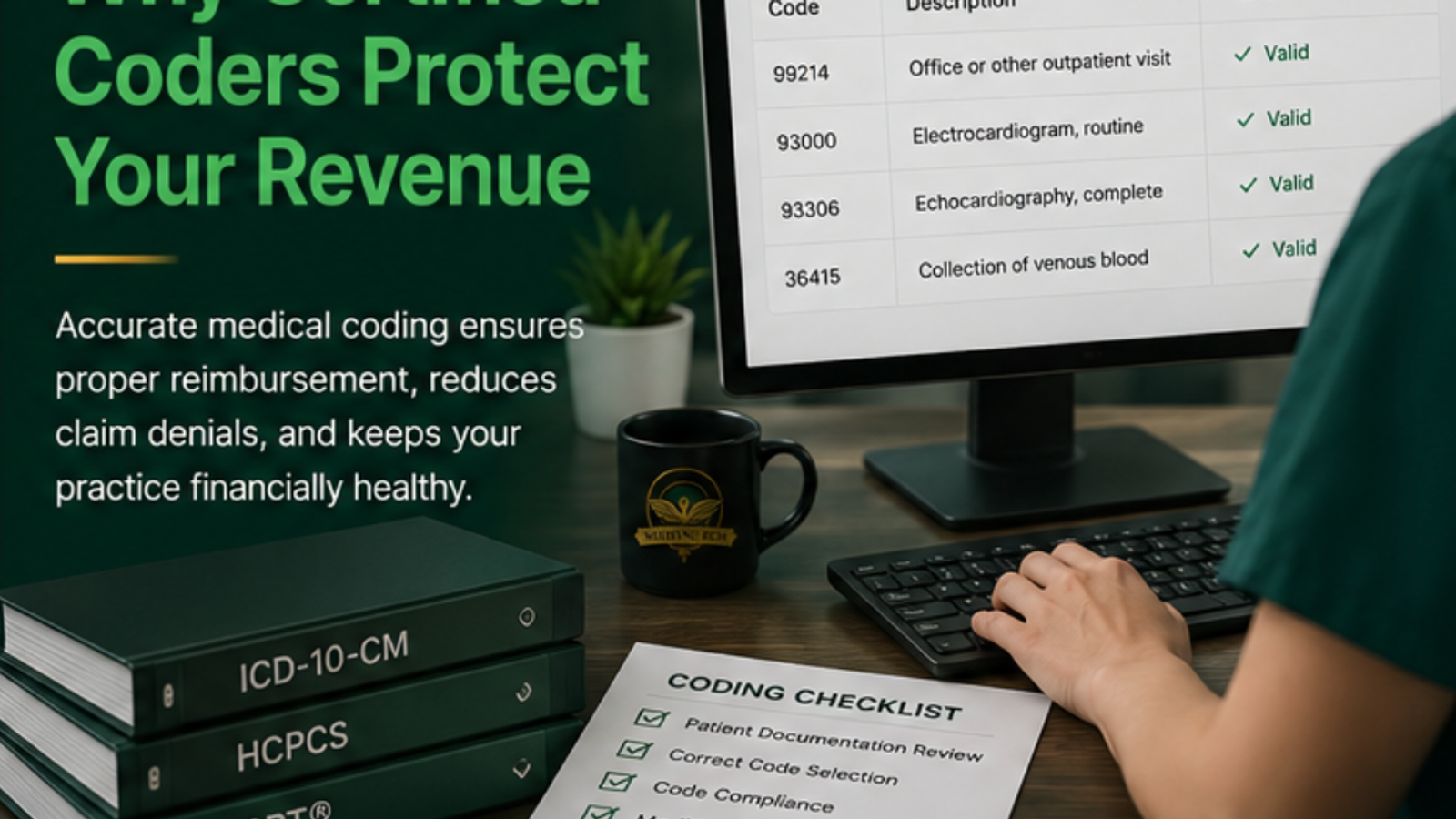
Every claim a practice submits depends on accurate coding. Get it right, and a clean claim moves through the payer's system without friction. Get it wrong, even slightly, and the result can be a denial, a delayed payment, or worse, an audit. This is why medical coding services deserve far more attention than most practices give them.
Why Coding Accuracy Is the Foundation of a Healthy Revenue Cycle
Coding sits at the very start of the billing process, which means an error here affects everything downstream. A single incorrect code can trigger a denial that takes days or weeks to resolve, or worse, a claim that is paid incorrectly and later flagged during a payer audit. Practices that treat coding as a quick administrative step, rather than a specialized skill, tend to see this reflected directly in their denial rates and their average time to payment.
What Certified Coders Bring That Software Alone Cannot
Coding software can flag obvious errors, but it cannot fully replace the judgment of a trained coder who understands how documentation, medical necessity, and payer specific rules interact. Certified coders, credentialed through organizations like AAPC, complete rigorous training and testing on CPT, ICD 10, and HCPCS coding systems, and are required to maintain their certification through ongoing education as codes and payer rules change every year.
This matters because coding is not static. Codes are added, retired, and redefined annually, and payer specific rules about bundling, modifiers, and documentation requirements shift frequently as well. A certified coder who stays current with these changes catches issues that outdated knowledge, or software alone, would miss entirely.
Common Coding Errors That Trigger Denials
- Using an outdated code that was retired or redefined in a recent update
- Missing or incorrect modifiers on procedures performed together
- Codes that do not match the documentation in the patient's chart
- Upcoding or undercoding relative to the actual service provided
- Incorrect diagnosis codes that do not support medical necessity for the billed procedure
Each of these errors is preventable with careful, experienced coding review before a claim is ever submitted, rather than being caught only after a denial arrives.
Coding Accuracy and Audit Risk
Beyond individual denials, poor coding accuracy creates a longer term risk: payer audits. Consistent patterns of coding errors, particularly upcoding, can trigger a formal audit of a practice's billing history, which is a far more disruptive and time consuming process than correcting a single denied claim. Practices that prioritize coding accuracy consistently reduce this risk significantly, since audits are far more likely to target billing patterns that look inconsistent or aggressive over time.
How Coding and Denial Management Work Together
Coding accuracy and denial management services are closely connected. When a claim is denied due to a coding issue, a strong denial management process does not just correct and resubmit the claim, it feeds that information back to the coding team so the same mistake does not repeat on future claims. This feedback loop is one of the most effective ways to steadily reduce a practice's overall denial rate over time.
Choosing a Billing Partner With Strong Coding Standards
When evaluating medical billing outsourcing companies, ask specifically about coder certification, ongoing training, and how coding accuracy is reviewed internally. A billing partner that cannot speak clearly to these questions is less likely to catch the kind of subtle coding errors that quietly affect revenue month after month. Practices working with a medical billing company Houston TX team benefit from coders trained across the specialties most common in the local market.
How Coding Errors Affect Patient Trust
Coding accuracy is often discussed purely as a revenue issue, but it also affects patients directly. Incorrect coding can lead to a patient being billed for the wrong amount, receiving a confusing explanation of benefits, or being told a service was not covered when it actually should have been. These billing errors erode patient trust and generate unnecessary phone calls and complaints, adding administrative burden on top of the original financial impact of the coding mistake itself.
Ongoing Coder Education as Codes Change Every Year
Coding systems are updated on a recurring schedule, with CPT and HCPCS codes typically revised annually and ICD 10 updates following a similar cycle. A coder who completed certification years ago but has not kept up with ongoing education risks applying outdated codes without realizing it. This is why certification alone is not enough. Practices should ask whether a billing partner's coders complete continuing education specifically tied to maintaining their credentials, since this ongoing requirement is what keeps their knowledge current rather than static.
Coding Accuracy Across Different Specialties
Coding complexity varies significantly by specialty, and a coder experienced in general primary care billing may not be equally prepared to code interventional cardiology procedures or complex orthopedic surgeries. Specialty specific coding knowledge, built through repeated exposure to a specialty's most common procedures and payer patterns, tends to produce more consistently accurate claims than a purely generalist approach applied uniformly across every specialty a billing company supports.
Building an Internal Coding Quality Review Process
Practices that keep coding in house can still improve accuracy by building a simple internal review process, such as a second set of eyes reviewing a sample of claims each week before submission. This kind of periodic quality check catches recurring errors early, before they accumulate into a larger denial or audit problem. Even a modest, consistent review process tends to outperform no review process at all, particularly for practices without a fully certified coding team on staff.
Frequently Asked Questions
Q: What is the difference between a certified coder and a general billing employee?
A: A certified coder has completed formal training and testing on CPT, ICD 10, and HCPCS coding systems and maintains that certification through ongoing education, while a general billing employee may not have specialized coding credentials.
Q: How often do medical codes change?
A: Coding systems are updated at least annually, with some payer specific rules changing even more frequently, which is why ongoing coder education matters.
Q: Can coding software replace a human coder?
A: Software can catch some obvious errors, but it cannot fully replace the judgment needed to interpret documentation and apply payer specific rules correctly.
Q: What is upcoding and why does it matter? A: Upcoding is billing for a more complex or expensive service than what was actually provided, and it significantly increases a practice's risk of a payer audit if it happens consistently.
Q: How does coding accuracy affect claim denial rates?
A: Coding errors are one of the most common root causes of claim denials, so improving coding accuracy directly reduces the number of claims that are denied and require resubmission.
Q: Does MediSync RCM use certified coders?
A: Yes. Our coding team stays current with CPT, ICD 10, and HCPCS updates and is trained on the specific requirements of the specialties we support.
Q: How do coding errors affect patients directly?
A: Incorrect coding can lead to inaccurate patient bills, confusing insurance explanations, or a service being labeled as not covered when it should have been, creating frustration beyond just the financial impact.
Q: Why isn't certification alone enough to guarantee coding accuracy?
A: Coding rules change frequently, so a coder must complete ongoing continuing education to keep their knowledge current rather than relying on training completed years earlier.
Q: Should every practice use specialty specific coders?
A: It depends on the complexity of the specialty. Highly specialized fields like cardiology and orthopedics benefit significantly from specialty specific coding experience, while more general specialties may see less dramatic differences.
Q: How can a practice tell if its current coding is accurate?
A: Reviewing denial trends by reason code and comparing coding patterns against current payer guidelines are two practical ways to identify recurring coding issues before they become a larger problem.
About MediSync RCM Team
MediSync RCM is a Houston-headquartered revenue cycle management firm supporting healthcare practices nationwide.
Related Articles


Stay Updated with Healthcare Insights
Get the latest articles on medical billing, revenue cycle management, and healthcare technology delivered to your inbox.