
Revenue Cycle Management for Cardiology Practices: A Specialty Guide
Cardiology billing is one of the more complex specialties to manage, between diagnostic testing, interventional procedures, and frequent prior authorizations.

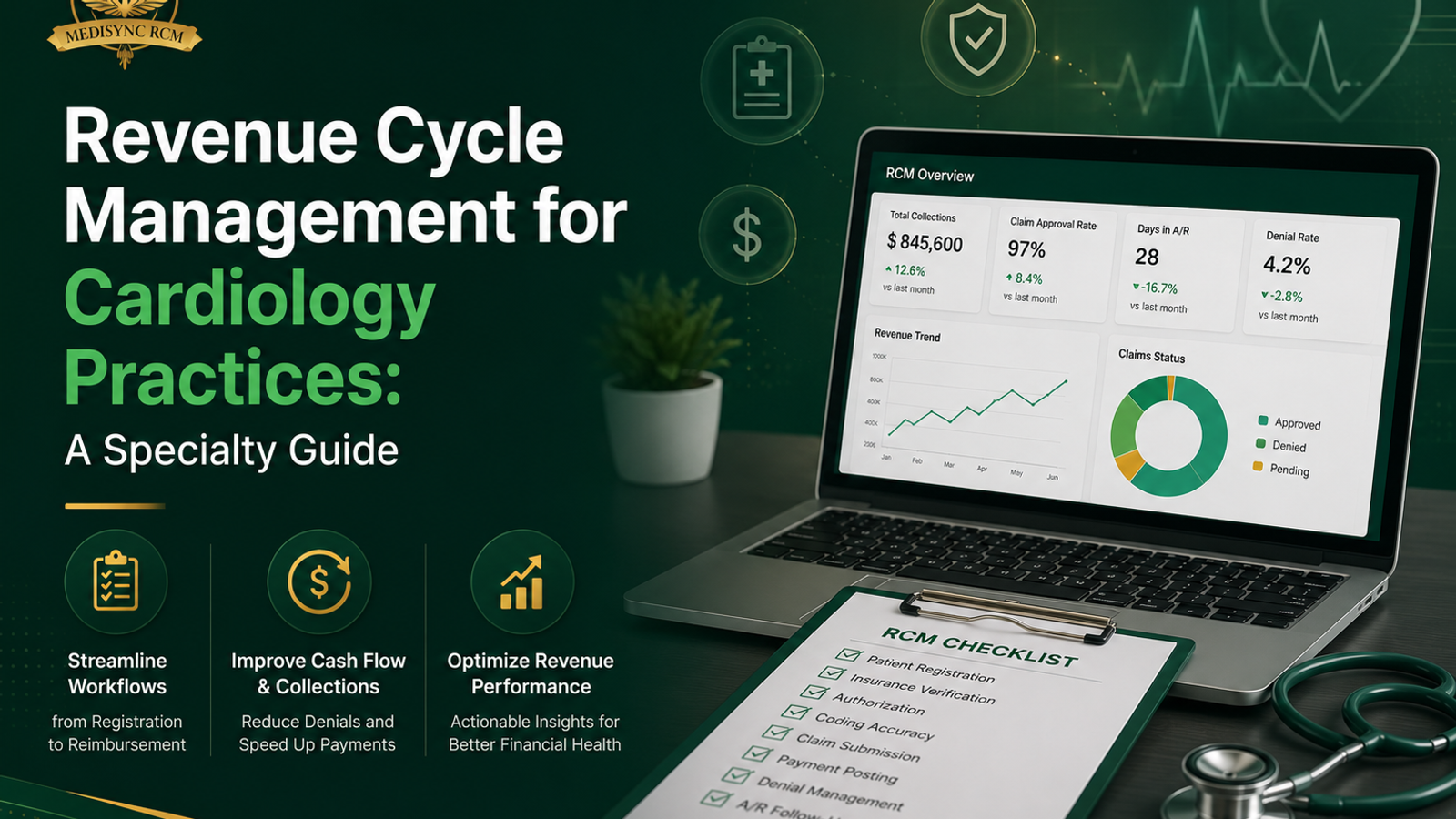
Cardiology billing is widely regarded as one of the more complex specialties to manage, and for good reason. Between diagnostic testing, interventional procedures, and frequent prior authorization requirements, cardiology practices deal with a level of billing complexity that general practice billing staff are rarely equipped to handle well.
This guide covers what makes cardiology revenue cycle management services different, where denials most often originate, and how specialized billing support protects revenue that generalist billing teams frequently leave on the table.
Why Cardiology Billing Is More Complex Than General Practice Billing
A single cardiology visit can generate multiple billable components, from the office visit itself to diagnostic imaging, stress testing, or interventional procedures performed the same day. Each component has its own coding requirements, and many require specific modifiers to indicate that multiple services were medically necessary and properly documented. Getting even one of these details wrong can trigger a denial or a significant reduction in payment.
Payer scrutiny also tends to run higher for cardiology claims than for many other specialties, given the relatively high cost of cardiac procedures. This means documentation and coding need to be precise on the first submission, since a denied high value claim represents a meaningful revenue loss if it is not corrected and resubmitted quickly.
Common Denial Triggers in Cardiology Claims
- Missing or incomplete prior authorization for diagnostic or interventional procedures
- Incorrect modifier usage on same day multiple procedure claims
- Medical necessity documentation that does not clearly support the billed procedure
- Bundling errors between related diagnostic and procedural codes
- Eligibility issues tied to Medicare Advantage plans, which are common among cardiology patients
Many of these issues are preventable with the right process in place before a claim is ever submitted, rather than caught only after a denial arrives weeks later.
The Role of Prior Authorization in Cardiology Practices
Prior authorization requirements are especially common in cardiology, covering everything from advanced imaging to certain interventional procedures. A missed or incomplete authorization is one of the most common and most avoidable reasons cardiology claims are denied. Tracking authorization status for every scheduled procedure, well before the patient's appointment, prevents a scheduled procedure from turning into an unpaid claim after the fact.
Coding Accuracy for Diagnostic and Interventional Cardiology
Cardiology coding spans a wide range of complexity, from relatively straightforward diagnostic tests to highly detailed interventional procedure codes. Certified coders with specific cardiology experience understand how to apply the correct codes and modifiers for procedures like cardiac catheterization, echocardiograms, and stress tests, which reduces the kind of coding errors that generalist billing staff are more likely to make. This directly supports accurate medical billing and coding services and fewer downstream denials.
Denial Management Built for Cardiology Claims
Effective denial management services for a cardiology practice go beyond simply resubmitting a denied claim. They involve tracking denial reasons specific to cardiology, such as authorization gaps or bundling errors, and correcting the underlying process so the same issue does not repeat across future claims. Given the higher dollar value of many cardiology procedures, even a small improvement in first pass claim acceptance can represent a meaningful revenue gain.
Supporting Houston Area Cardiology Practices
For cardiology practices in and around Houston, working with a revenue cycle management Houston TX partner familiar with regional payers adds a practical advantage, since many of the same commercial and Medicare Advantage plans appear repeatedly across the local market. Familiarity with how those specific payers handle cardiology claims helps prevent avoidable denials before they happen.
Documentation Requirements for High Value Cardiology Procedures
Interventional cardiology procedures typically require more extensive documentation than a routine office visit, including detailed procedure notes, medical necessity justification, and supporting diagnostic results. Payers reviewing a high value claim often scrutinize this documentation closely before approving payment, which means incomplete or vague documentation is one of the more common reasons a technically well coded claim still gets denied or delayed. Building a documentation checklist specific to each major procedure type helps ensure nothing is missing before a claim goes out.
How Cardiology Practices Can Audit Their Own Denial Data
Even practices that are not ready to bring in a specialized billing partner can benefit from reviewing their own denial data on a regular basis. Categorizing denials by procedure type, payer, and reason code often reveals patterns that are easy to miss when claims are handled one at a time. A practice that notices, for example, that a specific payer consistently denies a certain stress test code can address that pattern directly with the payer or adjust internal documentation practices accordingly, rather than continuing to lose revenue to the same preventable issue every month.
Coordinating Billing Across Cardiology Subspecialties
Many cardiology practices include physicians who focus on different subspecialties, from interventional cardiology to electrophysiology to general cardiology, each with its own procedure mix and coding nuances. A billing team that treats every provider identically, without accounting for these differences, is more likely to apply generic coding assumptions that do not hold up across every subspecialty. Coordinating billing with awareness of each provider's specific procedure mix helps ensure coding accuracy stays consistent across the full practice rather than only for the most common procedure types.
What Growing Cardiology Practices Should Plan For
As a cardiology practice adds providers or expands into new procedure types, its billing needs grow more complex at the same time. A practice that previously handled billing informally with one or two staff members often reaches a point where claim volume and procedure complexity outpace what that team can manage accurately. Recognizing this transition early, rather than waiting until denial rates have already climbed, allows a practice to bring in additional billing support or specialized expertise before revenue is meaningfully affected. Practices planning to add interventional capabilities or a new subspecialty in particular should evaluate their billing capacity well before the transition, since these additions typically bring higher complexity procedures with them.
Frequently Asked Questions
Q: Why do cardiology practices have higher claim denial rates than some other specialties?
A: Cardiology involves more prior authorization requirements, complex modifier usage, and high value procedures that draw closer payer scrutiny, all of which increase the chance of a denial if not handled carefully.
Q: What is the most common reason cardiology claims are denied?
A: Missing or incomplete prior authorization is one of the most frequent and most preventable reasons cardiology claims are denied.
Q: Do I need a billing company with specific cardiology experience?
A: It helps significantly. Cardiology coding and authorization requirements are specialized enough that general billing experience alone often is not enough to catch every potential issue before submission.
Q: How does bundling affect cardiology billing?
A: Certain cardiology procedures must be billed together under a single code, while others must be billed separately with appropriate modifiers, and getting this wrong can lead to denials or reduced payment.
Q: Can better revenue cycle management actually increase cardiology practice revenue?
A: Yes. Because cardiology procedures often carry higher reimbursement values, even modest improvements in denial prevention and first pass acceptance can meaningfully affect total collections.
Q: Does MediSync RCM have experience with cardiology billing specifically? A: Yes. Our billing team supports cardiology practices alongside other specialties including internal medicine, orthopedics, and neurology, with billers trained on each specialty's specific requirements.
Q: What documentation is most important for interventional cardiology claims?
A: Detailed procedure notes, clear medical necessity justification, and supporting diagnostic results are typically the most scrutinized documentation elements for high value cardiology procedures.
Q: How often should a cardiology practice review its own denial trends?
A: Reviewing denial data monthly is generally enough to catch emerging patterns early, before they compound into a larger, harder to reverse revenue issue.
Q: Do different cardiology subspecialties require different billing expertise? A: Yes. Interventional cardiology, electrophysiology, and general cardiology each involve different procedure codes and payer patterns, so billing accuracy improves when coders understand the specific subspecialty mix of a practice.
Q: What is the fastest way for a cardiology practice to reduce denials this quarter?
A: Focusing first on confirming prior authorization for every scheduled procedure tends to produce the fastest visible improvement, since missing authorization is one of the most common and preventable denial triggers.
About MediSync RCM Team
MediSync RCM is a Houston-headquartered revenue cycle management firm supporting healthcare practices nationwide.
Related Articles


Stay Updated with Healthcare Insights
Get the latest articles on medical billing, revenue cycle management, and healthcare technology delivered to your inbox.