
Virtual Medical Assistants vs In House Staff: Which Saves Your Practice More Time?
Every growing practice eventually faces the same staffing question: hire another in house employee, or bring in outside support.

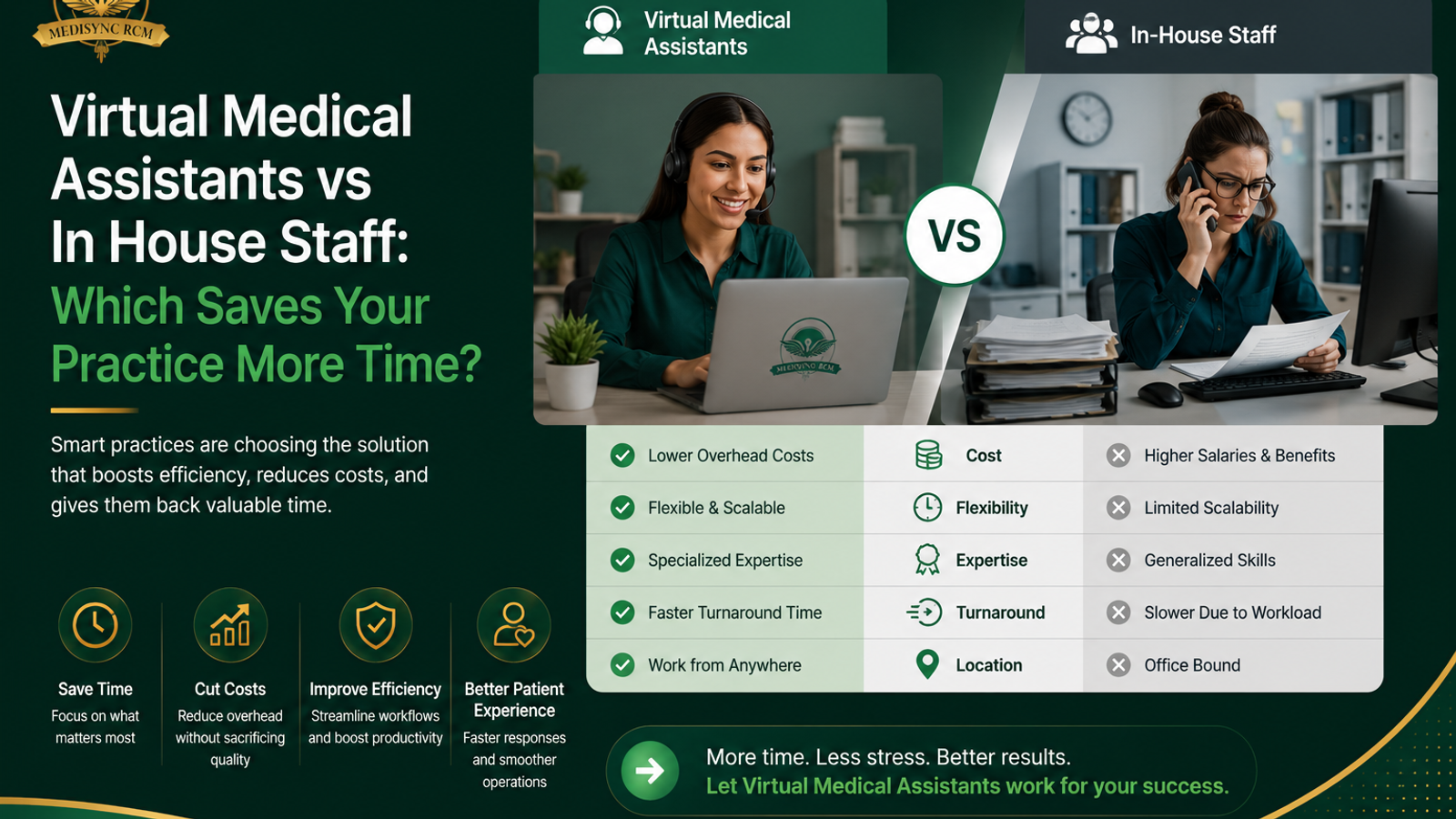
Every growing practice eventually faces the same staffing question: hire another in house employee, or bring in outside support. Virtual medical assistant services have become a popular answer for practices that need administrative support without the cost and delay of a traditional hire, but the right choice depends on what your practice actually needs.
What Virtual Medical Assistants Actually Do
A virtual medical assistant typically handles administrative tasks that do not require a physical presence in the office, including answering patient calls, managing referrals, processing documentation, handling scheduling, and supporting insurance verification. The work is similar to what an in house administrative employee would do, but performed remotely through secure systems rather than at a desk in your practice.
Comparing Hiring Timelines and Flexibility
Hiring an in house employee typically takes weeks, between posting the role, interviewing candidates, and completing onboarding, and that timeline can stretch even longer in a competitive local job market. Virtual staffing arrangements are generally much faster to start, since the provider already has trained staff available rather than needing to recruit and train someone new for your specific practice.
Flexibility is another key difference. Scaling an in house team up or down means hiring or laying off employees, which is a significant undertaking. Virtual staffing arrangements can typically flex more easily with a practice's actual patient volume and administrative workload.
Comparing Cost and Overhead
In house hires come with costs beyond salary, including benefits, payroll taxes, equipment, and office space. Virtual medical assistants are typically structured without these additional overhead costs, since the provider handles equipment, training, and management on their end. For many practices, this makes virtual staffing a more cost effective way to add administrative capacity, particularly for tasks that do not require a physical presence.
Where In House Staff Still Make Sense
Virtual staffing is not the right fit for every role. Front desk positions that require greeting patients in person, or clinical support roles that involve hands on patient care, obviously require an in house presence. The clearest opportunities for virtual staffing tend to be administrative and back office functions, phone support, documentation, scheduling, and insurance verification, where the work can be performed just as effectively without being physically present in the office.
How Virtual Staffing Integrates With Your Existing Team
The most effective virtual staffing arrangements do not operate in isolation from the rest of your practice. Our front office and back office staffing model is built to integrate directly with your existing workflow and with our broader billing and insurance verification services, so information moves smoothly between your in house team and your virtual support rather than existing as two disconnected systems.
Making the Right Choice for Your Practice
Many medical billing company Texas practices find that a blended approach works best: keeping in house staff for roles that require a physical presence, while using virtual medical assistants to handle administrative overflow, phone support, and back office tasks that were previously falling behind. This combination often frees up existing staff to focus on higher value, patient facing work.
Security Considerations for Virtual Staffing
Because virtual medical assistants work with patient information remotely, security is a reasonable and important concern. A well run virtual staffing provider operates through secure, access controlled systems rather than personal devices or unsecured connections, similar to the safeguards expected of any HIPAA compliant billing partner. Practices considering virtual staffing should ask the same kinds of data security questions they would ask any vendor handling patient information, including how access is limited by role and how remote connections are secured.
How to Pilot Virtual Staffing Before Committing Fully
Practices hesitant to fully commit to virtual staffing can start with a smaller pilot, assigning a single well defined function, such as appointment reminders or insurance verification support, to a virtual assistant before expanding further. This approach allows a practice to evaluate communication, reliability, and quality of work on a smaller scale, building confidence before shifting a larger share of administrative work to a virtual team. Most practices that start with a pilot find the transition to broader virtual support far less intimidating once they have seen it work well on a smaller task first.
Measuring Success Once Virtual Staffing Is in Place
Once virtual staffing is part of a practice's operations, it is worth tracking a few simple measures of success: how quickly patient calls are answered, how consistently appointment reminders reduce no shows, and whether front desk staff report feeling less overwhelmed during peak hours. These indicators give practice owners a concrete way to evaluate whether a virtual staffing arrangement is delivering real value, rather than relying on a general impression alone.
Common Concerns Practices Have Before Adopting Virtual Staffing
Practice owners considering virtual staffing for the first time often raise similar concerns: will patients notice the difference, will communication between the virtual assistant and in house staff be smooth, and will the arrangement actually save time rather than creating a new coordination burden. In practice, most of these concerns are addressed through a clear onboarding process that documents how the virtual assistant should handle common scenarios, paired with a short initial period where communication expectations are refined based on real experience rather than assumptions made before the arrangement began.
Frequently Asked Questions
Q: What tasks are best suited for a virtual medical assistant?
A: Administrative and back office tasks such as phone support, scheduling, referral management, documentation, and insurance verification tend to work well for virtual staffing.
Q: How quickly can a practice start using virtual medical assistants?
A: Much faster than a traditional hire in most cases, since virtual staffing providers typically have trained staff already available rather than needing to recruit and onboard someone new.
Q: Is virtual staffing less expensive than hiring in house?
A: Often yes, since virtual arrangements typically avoid the additional overhead of benefits, payroll taxes, equipment, and office space that come with a traditional in house hire.
Q: Can virtual medical assistants handle patient phone calls?
A: Yes. Answering patient calls, scheduling appointments, and handling routine questions are common tasks for virtual medical assistants trained specifically for healthcare environments.
Q: Do virtual medical assistants have access to patient records?
A: Yes, through secure, access controlled systems designed to protect patient information, similar to the safeguards used for billing and insurance verification data.
Q: Should a practice choose only virtual staffing or only in house staff?
A: Most practices benefit from a blended approach, using in house staff for roles that require a physical presence and virtual staffing for administrative tasks that do not.
Q: How can a practice test virtual staffing without a full commitment?
A: Starting with a single, well defined task, such as appointment reminders or insurance verification support, allows a practice to evaluate a virtual staffing provider on a smaller scale before expanding.
Q: What security measures should a virtual staffing provider have in place? A: Secure, access controlled systems, role based access limits, and protected remote connections are all reasonable safeguards to expect from any provider handling patient information remotely.
Q: How many hours per week do practices typically start with when piloting virtual staffing?
A: Many practices begin with a part time arrangement focused on a single task before expanding to broader or full time support once the arrangement proves reliable.
Q: Can virtual staffing support multiple providers within the same practice? A: Yes. A single virtual staffing arrangement can typically be scaled to support scheduling, phone calls, and administrative tasks across several providers within one practice.
About MediSync RCM Team
MediSync RCM is a Houston-headquartered revenue cycle management firm supporting healthcare practices nationwide.
Related Articles


Stay Updated with Healthcare Insights
Get the latest articles on medical billing, revenue cycle management, and healthcare technology delivered to your inbox.