DME Billing Compliance Checklist for 2026
what DME suppliers and practices need in place heading into 2026 to stay compliant and get paid without unnecessary delay.

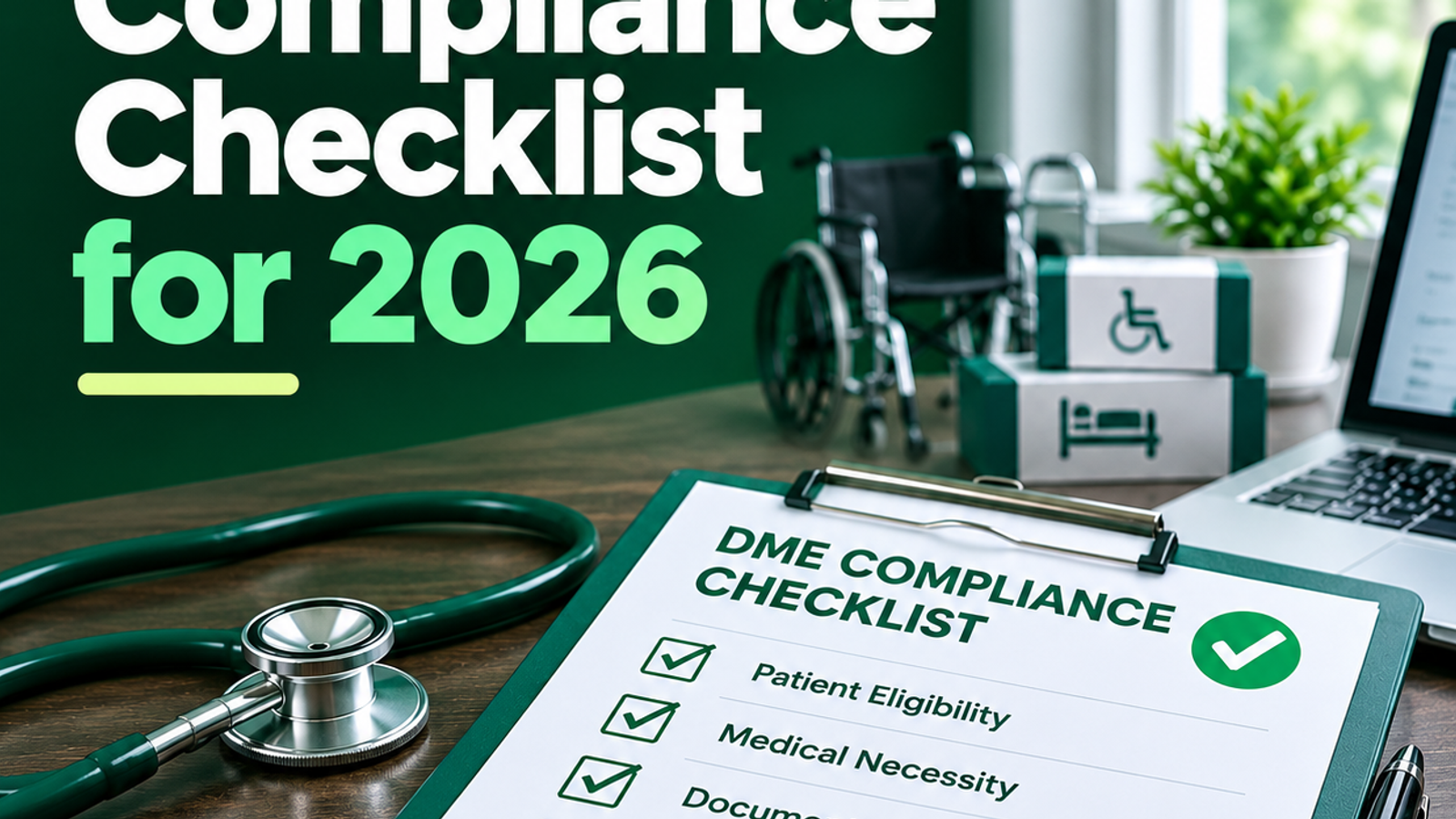
Durable medical equipment billing carries some of the strictest documentation and compliance requirements in healthcare, and the consequences of getting it wrong go beyond a simple denial. Incomplete documentation or coding errors in DME billing services can trigger audits, recoupments, and in serious cases, allegations of improper billing. This checklist, from the team at MediSync RCM, covers what DME suppliers and practices need in place heading into 2026 to stay compliant and get paid without unnecessary delay.
Why DME Billing Carries Unique Compliance Risk
Unlike many other categories of medical billing, DME claims are subject to detailed documentation requirements that must be satisfied before a claim is even submitted, not just when a payer requests supporting information after the fact. Requirements around medical necessity, proof of delivery, and physician orders are strictly enforced, and missing even one required element can result in a denial regardless of whether the equipment was medically appropriate.
Documentation Requirements Worth Reviewing Regularly
- A valid, signed physician order that matches the equipment billed
- Detailed medical necessity documentation supporting why the equipment is required
- Proof of delivery, signed and dated by the patient or an authorized representative
- Accurate HCPCS coding that matches the specific equipment provided
- Documentation of any required prior authorization before billing
Reviewing this checklist against every DME claim before submission, rather than only when a payer requests it, is one of the most effective ways to reduce both denials and audit risk.
Prior Authorization Requirements for DME
Many categories of durable medical equipment require prior authorization before a claim will be paid, and this requirement has expanded across more equipment categories in recent years. Submitting a claim without required authorization results in an automatic denial, and in some cases makes it more difficult to appeal successfully after the fact. Tracking which specific equipment categories require authorization for each payer a practice bills is essential, since these requirements are not always consistent across different plans.
Coding Accuracy for DME Claims
DME coding relies on HCPCS Level II codes, which are highly specific to equipment type, and using an incorrect or outdated code is a common source of denials. Certified coders who stay current with annual HCPCS updates catch these issues before submission, rather than after a denial has already delayed payment. The Centers for Medicare and Medicaid Services publishes detailed guidance on DME coding and coverage requirements that suppliers and billing teams should review regularly, since rules are updated periodically throughout the year.
Proof of Delivery Requirements
Proof of delivery documentation, confirming that equipment was actually delivered to and received by the patient, is a frequent focus of DME audits. This documentation must be signed and dated appropriately, and gaps here are one of the more common findings when a DME claim is audited after payment. Building proof of delivery collection directly into the delivery process, rather than treating it as separate paperwork, helps ensure this requirement is consistently met.
Avoiding Audit Triggers
Certain billing patterns tend to draw closer payer scrutiny, including high volumes of a single equipment category, billing patterns that deviate significantly from similar suppliers, and repeated claims for the same patient without clear documentation of ongoing medical necessity. While not every audit can be avoided, consistent documentation practices and coding accuracy significantly reduce the likelihood that a routine claim pattern triggers unwanted attention.
Denial Management Specific to DME Claims
Given how document intensive DME billing is, denial management services for DME need to track denials by specific missing element, whether that is an incomplete physician order, missing proof of delivery, or an authorization gap, so the underlying process can be corrected rather than simply resubmitting the same incomplete claim.
Supporting DME Suppliers Across Texas
DME suppliers working with a medical billing company Texas based team benefit from billing support familiar with the documentation standards that payers in the region consistently enforce, reducing the back and forth that often accompanies DME claims submitted without full local payer awareness.
Building an Internal DME Compliance Review Process
Suppliers that keep DME billing in house can strengthen compliance by building a regular internal review process, checking a sample of recent claims against the full documentation checklist before submission becomes routine. This kind of periodic self audit catches missing elements, an incomplete physician order or absent proof of delivery, before a payer catches them instead. Even a modest, consistently applied review process meaningfully reduces both denial rates and audit exposure over time.
Staying Current as DME Requirements Evolve
Documentation and coding requirements for DME billing are not static, and payers periodically update coverage criteria, prior authorization lists, and documentation standards. A supplier or billing team that reviews payer bulletins and coding updates on a regular schedule, rather than only when a claim is denied, stays ahead of changes rather than reacting to them after revenue has already been affected. This ongoing attention is particularly important heading into any new billing year, when many payers issue updated policies at once.
The Role of Certified Coders in DME Billing Accuracy
Because HCPCS coding for DME is so specific to individual equipment types, certified coders with direct DME experience catch coding mismatches that a generalist coder might miss entirely. A code that closely resembles the correct one but describes slightly different equipment can result in a denial or, worse, an overpayment that must later be returned during an audit. Investing in coders with specific DME training reduces both of these risks meaningfully compared to relying on general medical coding knowledge alone.
The same underlying discipline applies across other specialties too. Our guide to medical coding accuracy covers why certified coders matter more broadly, and if your practice also handles dental claims, our dental billing guide covers a similarly document intensive billing category.
Frequently Asked Questions
Q: What is the most common reason DME claims are denied? A: Missing or incomplete documentation, particularly around medical necessity and proof of delivery, is one of the most frequent reasons DME claims are denied.
Q: Does all durable medical equipment require prior authorization? A: No, but an increasing number of equipment categories do, and requirements vary by payer, which is why tracking authorization requirements by equipment type matters.
Q: What is proof of delivery in DME billing? A: It is documentation, typically a signed and dated form, confirming that equipment was actually delivered to and received by the patient.
Q: How often do HCPCS codes for DME change? A: HCPCS Level II codes are updated periodically throughout the year, which is why ongoing coder education is important for DME billing accuracy.
Q: What increases the risk of a DME billing audit? A: High volumes of a single equipment category, billing patterns that differ significantly from similar suppliers, and inconsistent documentation of ongoing medical necessity can all increase audit risk.
Q: Can a denied DME claim be appealed successfully? A: In many cases yes, particularly if the missing documentation can be located and submitted, though claims missing required prior authorization are generally more difficult to appeal.
Q: Does MediSync RCM have experience with DME billing specifically? A: Yes. Our team supports DME billing and coding alongside our broader medical billing and coding services for practices and suppliers nationwide.
Q: How can a DME supplier reduce compliance risk going into 2026? A: Reviewing documentation requirements regularly, confirming prior authorization rules by equipment type, and using coders who stay current with HCPCS updates are the most effective steps.
Q: How often should a DME supplier review its own claims for compliance? A: A regular schedule, such as monthly, of reviewing a sample of recent claims against the full documentation checklist helps catch issues before a payer does.
Q: Do DME documentation requirements change often? A: Payers periodically update coverage criteria and documentation standards, particularly at the start of a new billing year, which is why ongoing review of payer bulletins matters.
Call to action: Get a Free DME Billing Compliance Review
About MediSync RCM Team
MediSync RCM is a Houston-headquartered revenue cycle management firm supporting healthcare practices nationwide.
Related Articles


Stay Updated with Healthcare Insights
Get the latest articles on medical billing, revenue cycle management, and healthcare technology delivered to your inbox.